Source Leak Proof Thermal Insulation Water Bottle for Camping, Travel, Daily Use
Compare 26 leak proof thermal insulation water bottle options from verified Chinese manufacturers. Buyers can evaluate double wall stainless steel designs, customization services, and certifications like FDA and LFGB for various applications including camping and daily use.
Key considerations
Products List


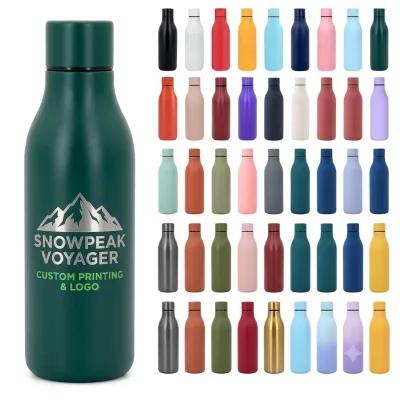
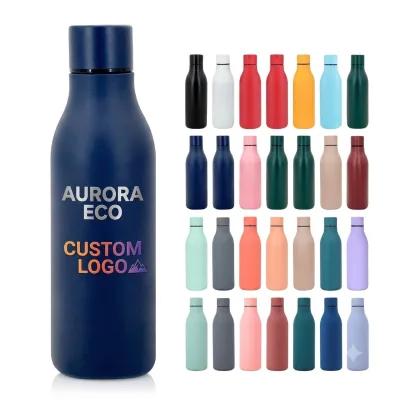
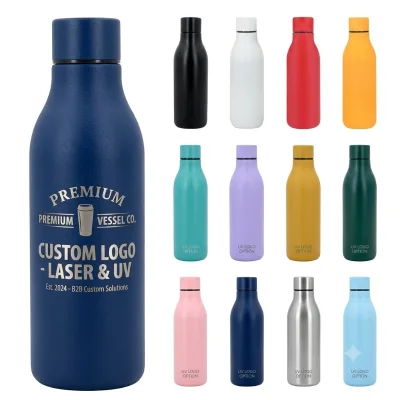

Comprehensive Sourcing Guide
Strategic Sourcing Guide for Leak Proof Thermal Insulation Water Bottles
Navigating the global market for leak proof thermal insulation water bottles requires a disciplined approach that balances technical performance, regulatory compliance, and supply chain reliability. Buyers in the B2B sector must move beyond generic marketing claims to verify specific product attributes that ensure the vessel meets operational demands. The following guide synthesizes available market data and industry standards to provide a robust framework for procurement decisions, focusing on the critical intersection of material science, safety certifications, and customization capabilities.
Technical Specifications and Material Integrity
The core functionality of a thermal insulation water bottle relies heavily on its construction and material composition. High-performance units typically utilize a double-wall vacuum structure to minimize heat transfer. In the current market, a prevalent configuration involves an inner wall constructed from Stainless Steel 304, paired with an outer wall made of Stainless Steel 201. This specific structural arrangement, often cited as "Double Wall Inner Ss 304 Outer Ss 201," offers a balance between food-grade safety for the inner chamber and cost-effective durability for the exterior. The 304 grade is essential for preventing corrosion and ensuring the vessel does not impart metallic tastes to beverages, while the 201 outer shell provides structural rigidity.
The manufacturing technique plays a significant role in the integrity of the vacuum seal. Advanced production lines employ blow molding and precision welding to create a hermetic seal between the walls. This process is critical for maintaining thermal insulation performance, which is a primary requirement for buyers seeking to keep beverages hot or cold for extended periods. Furthermore, the design of the mouth is a key differentiator. Options such as "Fine Mouth" designs are often preferred for sports and outdoor activities to control flow, while other models may feature a "Direct Drinking" method for convenience. The presence of a "Handle Lid" or "Handgrip" accessory adds utility, particularly for users engaging in camping or high-intensity activities where one-handed operation is necessary.
Leak-proof capabilities are not merely a feature but a structural necessity. Products labeled as "Leak Proof" generally incorporate silicone gaskets and screw-top mechanisms designed to withstand pressure changes. However, buyers must verify that the "Double Wall" construction does not compromise the seal at the neck. The "Anti-Corrosion Coating" mentioned in various product listings further enhances longevity, particularly for bottles intended for outdoor use where exposure to moisture and varying temperatures is constant.
Compliance and Certification Verification
In the B2B procurement of food-contact products, certification is the primary gatekeeper for market access. Buyers must rigorously verify that suppliers possess valid documentation for the specific regions where the products will be sold. The most frequently observed certifications in the current supply base include FDA (Food and Drug Administration) and LFGB (German Food and Feed Code). These standards ensure that the stainless steel and any plastic components, such as lids or gaskets, do not leach harmful substances into the beverage.
Beyond basic material safety, international trade often requires additional compliance markers. CE certification is a common requirement for products entering the European Economic Area, indicating conformity with health, safety, and environmental protection standards. Some suppliers also list ISO certifications or specific factory audits, such as BV (Bureau Veritas), which serve as third-party validations of the manufacturing process and quality management systems. When evaluating a supplier, procurement teams should request current, dated certificates rather than relying on marketing claims. The presence of "First Grade" quality levels suggests a commitment to high standards, but this should be corroborated by the specific test reports associated with the FDA or LFGB approvals.
It is crucial to note that certification requirements vary by application. For instance, bottles intended for "Camping" or "Outdoor Activity" scenarios may face stricter scrutiny regarding durability and chemical resistance. Buyers should ensure that the "Certificates" listed, such as LFGB/ISO, explicitly cover the specific product model and capacity range being ordered.
Cost Drivers and Pricing Dynamics
The pricing structure for thermal insulation water bottles is influenced by a complex interplay of material costs, customization levels, and order volume. The observed market price range for these products spans from approximately $0.95 to $5.96 USD. This wide variance is primarily driven by the degree of customization and the complexity of the design. A standard, unbranded bottle with a simple "Colored" finish will sit at the lower end of the spectrum, while a fully customized unit featuring specific logos, unique "American Style" designs, and premium packaging will command a higher price.
Order Volume is another critical cost driver. The Minimum Order Quantity (MOQ) in this sector typically ranges from 40 to 3,000 units. Suppliers often offer tiered pricing structures where the unit cost decreases as the order volume increases. For buyers with lower volume requirements, the per-unit cost may be higher due to the fixed costs of setup and tooling. Conversely, large-scale orders can leverage economies of scale to reduce costs significantly.
Customization is a major factor in price escalation. Services such as OEM (Original Equipment Manufacturer) for logo, color, and design are widely available but incur additional charges. The "Customized" status of the product standard implies that the mold and production line must be adjusted for specific client requirements. Additionally, packaging choices impact the final cost. While "Bulk" packing is the most economical option, "Box" or "Carton Box" packaging, especially if it includes single-piece bagging (e.g., 1PCS/Bag, 50PCS/Carton), adds material and labor costs. Buyers must weigh the value of premium packaging against the total budget, considering that "Universal" applicability often allows for standard packaging, whereas "Gifts/Promotion" usage may necessitate more elaborate presentation.
Typical Applications and Usage Scenarios
The versatility of leak proof thermal insulation water bottles makes them suitable for a diverse range of applications. The "Applicable Scenarios" are often listed as "Universal," yet specific product attributes point to niche markets. For example, the "Camping" and "Outdoor Activity" tags highlight the suitability of these bottles for rugged environments. Features like the "Handle Lid" and "Double Wall" construction are particularly valuable for hikers and campers who need to carry hot coffee or cold water in varying weather conditions.
The "Design Style" also influences the target demographic. "American Style" designs often appeal to a broad consumer base looking for a classic, robust aesthetic. These bottles are frequently marketed as "Daily use" items, with models like the "Daily use-6515D" indicating a focus on routine hydration. The "Applicable People" are generally listed as "Adults," suggesting that the size and grip are optimized for mature users, though some models may be suitable for teenagers depending on the capacity.
Capacity is a decisive factor for application. The market offers a range of sizes, including 12oz, 20oz, 25oz, and 32oz. Smaller capacities (12oz-20oz) are ideal for office settings or short commutes, while larger capacities (25oz-32oz) are better suited for outdoor adventures or all-day use. The "Boiling Water" applicability confirms that these vessels can handle high temperatures, making them safe for transporting hot beverages, which is a key requirement for thermal insulation claims.
Supplier Evaluation and Sourcing Strategy
When selecting a supplier, buyers must look beyond the product listing and assess the manufacturing capabilities and location. The primary sourcing hubs for these products are located in Guangdong, Jiangsu, and Zhejiang provinces in China. Each region may have different specializations; for instance, some suppliers may focus on high-volume production while others specialize in intricate customization.
The "OEM" capability is a critical indicator of a supplier's flexibility. A supplier that offers OEM services for logo, color, and design demonstrates the ability to tailor products to specific brand requirements. Buyers should verify the "Factory Audit" status, such as BV certification, to ensure the facility meets international quality and labor standards. The "Quality Level" of "First Grade" suggests a commitment to excellence, but this should be validated through sample testing.
Lead times and production capacity are also essential considerations. While specific lead times are not universally standardized in the provided data, the MOQ range of 40 to 3,000 units suggests that suppliers are equipped to handle both small trial orders and large-scale production runs. Buyers should inquire about the "prod_packing" standards to ensure that the packaging method aligns with their logistics requirements. Whether the product arrives in "Bulk," "Single Packed," or "Carton Box" will impact downstream warehousing and distribution costs.
Quality Control and Long-Term Procurement
Ensuring consistent quality is paramount for long-term procurement success. The "Double Wall" construction and "Vacuum" seal must be rigorously tested to prevent leaks and maintain thermal performance. Buyers should request samples that undergo pressure testing and thermal retention trials to verify the "Thermal Insulation Performance." The presence of "Anti-Corrosion Coating" should be confirmed through visual inspection and, if possible, salt spray testing.
For long-term partnerships, buyers should establish clear quality control protocols. This includes defining acceptable tolerances for dimensions, such as the "Cup Mouth Diameter" and overall "Standard" dimensions (e.g., 101020CM for packaging). The "prod_standard" being "Customized" means that the buyer and supplier must agree on precise specifications before production begins. Regular audits and third-party inspections can help maintain these standards over time.
Furthermore, sustainability is emerging as a key consideration. Some product attributes highlight "Sustainable" features, which may refer to the recyclability of stainless steel or the use of eco-friendly packaging. Buyers interested in corporate social responsibility should verify these claims and ensure that the supply chain aligns with their sustainability goals. By maintaining a focus on technical specifications, compliance, and supplier reliability, buyers can secure a steady supply of high-quality leak proof thermal insulation water bottles that meet the demands of their target markets.
FAQs
What certifications are required for leak proof thermal insulation water bottles?
Products typically require FDA and LFGB certifications to ensure food safety. Some listings also include CE or ISO certificates for international compliance. Buyers must verify that these documents cover the specific model and capacity being ordered.
How is the double wall structure constructed in these bottles?
The standard construction features an inner wall of Stainless Steel 304 and an outer wall of Stainless Steel 201. This configuration ensures food-grade safety while providing structural rigidity. Blow molding techniques are used to create a hermetic vacuum seal.
Can these bottles be customized for specific logos and colors?
Yes, OEM services are available for customizing logos, colors, and designs. The product standard is listed as customized, allowing for tailored production. Buyers should note that customization may affect the unit price and minimum order quantity requirements.
What is the typical price range for these thermal bottles?
The observed market price ranges from 0.95 to 5.96 USD per unit. Costs vary based on customization levels, packaging choices, and order volume. Higher prices often reflect premium features like specific designs or detailed packaging.
Which capacities are available for leak proof thermal insulation water bottles?
Available capacities include 12oz, 20oz, 25oz, and 32oz options. Some specifications also list 500ml, 1000ml, and 2000ml standards. The choice depends on whether the bottle is intended for daily office use or outdoor camping activities.
What are the minimum order quantities for these products?
The minimum order quantity ranges from 40 to 3000 units depending on the supplier. Lower volume orders may incur higher per-unit costs due to setup fees. Large orders can leverage economies of scale to reduce the overall price.
Where are these water bottles manufactured?
Manufacturing locations include Guangdong, Jiangsu, and Zhejiang provinces in China. These regions serve as primary sourcing hubs for stainless steel vacuum bottles. Buyers should verify the specific factory location to ensure it meets their logistics and audit requirements.